
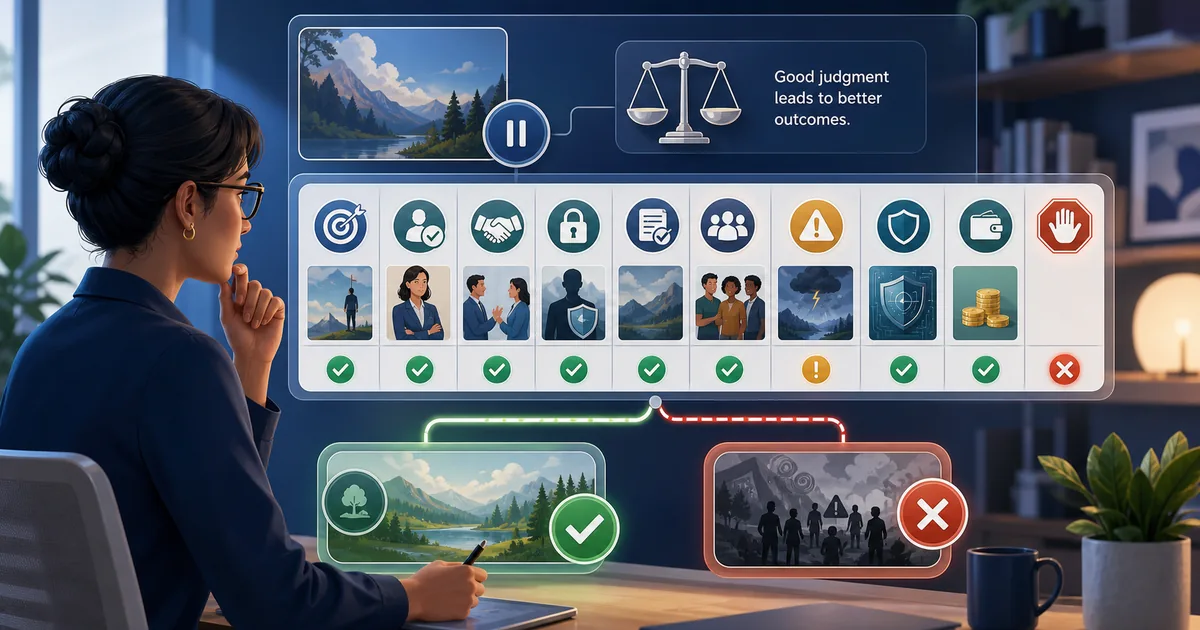
AI image tools can make difficult edits feel effortless, but ease of use is not the same as permission, safety, accuracy, or good judgment. The most important question is not simply whether a tool can produce an image. It is whether this exact use is lawful, consensual, proportionate, private, and respectful.
Begin with the purpose, not the feature
Write the intended outcome before selecting a tool or uploading a file. A clear purpose might be correcting your own photograph, creating a fictional adult character, or preparing an image every identifiable person has approved. If the purpose depends on secrecy, embarrassment, impersonation, or pressure, stop.
Define the legitimate task first, then compare only services capable of completing it under acceptable terms.
Separate technical possibility from permission
Access to an image does not give permission to transform it. A public profile photo, an old message, a previous relationship, or an earlier agreement for a different edit is not automatic consent for a new use. Permission should cover the image, tool, type of transformation, audience, storage, and sharing plan.
Consent must be freely given by an informed adult and can be withdrawn. If the answer is hesitant, pressured, unclear, or based on an assumption, do not proceed. Our guide explains why consent must be specific, informed, and ongoing.
Confirm adulthood without guessing
Never use sexualized or intimate image tools with anyone under 18. This includes generated, edited, fictionalized, or “aged-up” depictions based on a minor. If a person’s age is uncertain, the responsible decision is not to use the image.
Appearance, clothing, an online biography, or another person’s assurance may be unreliable. Adult-only rules are a minimum boundary, not a substitute for consent or local law.
A responsible decision checkpoint
- What exact outcome am I trying to create?
- Is every depicted person definitely an adult?
- Do I have explicit permission for this image, tool, result, and audience?
- Do I own the source or have the required licence?
- What identifying information could the file or background reveal?
- How will the service store, review, share, train on, or delete the upload?
- Could the result deceive, embarrass, pressure, or endanger anyone?
- Will the recipient understand that AI was involved?
- What price, renewal, credits, and cancellation terms apply?
- What fact or concern would make me stop immediately?
Check rights in the source material
Consent and copyright permission are related but different. A photographer, agency, employer, or platform may hold rights even when the subject approves the edit. A licence may permit viewing but prohibit modification, commercial use, or AI processing.
The safest sources are your own images, properly licensed materials, and fictional adult characters you created. Keep relevant permission and licence terms.
Reduce the information you expose
Before uploading, inspect the full image rather than only the main subject. Faces, reflections, documents, house numbers, vehicle plates, workplace badges, screens, school symbols, and location details can identify people. File metadata may contain a date, device, editing history, or GPS coordinates.
Crop unnecessary areas, remove metadata where appropriate, and avoid uploading a higher-resolution original when a smaller copy is sufficient. Data minimization does not remove every risk, but it limits what can be exposed if an account or service is compromised.
Read what the service does with files
Look for default retention, deletion controls, backup timelines, human review, model training, third-party processing, and contact details. “Private” or “secure” is not a complete explanation. A useful policy states which data is collected, why it is needed, who receives it, how long it remains, and what choices users have.
If a policy is missing, contradictory, undated, or vague about sensitive uploads, choose a clearer service. The privacy checklist before uploading provides a repeatable review.
Compare evidence instead of promises
Marketing language such as “best,” “instant,” “anonymous,” or “guaranteed” needs context. Results can vary by source quality, device, queue, plan, and repeated attempts. A provider statement about deletion or speed is not the same as independent verification.
Our overview of the best Undress AI tools organizes comparison factors, but users should still verify current prices, policies, restrictions, and availability on the provider’s own pages. Reviews support judgment; they do not replace it.
Test with low-risk material first
For a legitimate use, begin with fictional, synthetic, or non-identifying content. A low-risk test can reveal output limits, unexpected credit use, export restrictions, and account controls without exposing someone’s privacy.
A “test” is not an excuse to ignore consent. A deleted result may still leave data in logs or backups.
Judge consistency, not one impressive result
A selected example may be unusually successful. Look for repeated performance, visible artefacts, unintended identity changes, and errors that could mislead viewers. More attempts may consume more credits and increase the number of sensitive files stored.
Never treat an AI-generated or edited image as reliable evidence of a real event, body, relationship, or behaviour. Image quality can increase persuasive power without increasing truth.
Understand the complete cost
Check the total amount charged today, renewal interval, currency, taxes, credit expiry, failed-attempt rules, cancellation method, and refund conditions. A low introductory price can become expensive if credits expire or the subscription renews annually.
Set a spending limit before testing and stop when it is reached. Paying for a plan does not create a right to use another person’s image or override responsible-use rules.
Decide your stopping rules in advance
Good judgment is easier when the stop conditions are clear before curiosity, sunk cost, or pressure takes over. Stop if age is uncertain, consent changes, the source licence is unclear, the service cannot explain retention, the result creates unexpected harm, or another person asks for removal.
Also stop when a service requests unnecessary identity documents, payment outside normal channels, secrecy, remote access, or repeated purchases to unlock a promised result. Preserve ordinary transaction evidence and contact the payment provider when fraud is suspected.
Plan the audience before creating
Permission to create does not automatically include permission to send, publish, advertise, or store indefinitely. Define who may see the result, through which channel, for how long, and whether recipients may save or forward it. A private message can still be copied.
If the result could be mistaken for an authentic photograph, disclose the meaningful AI involvement in a way the intended audience can understand. Labels should not be hidden where they will disappear during reposting.
Respond properly when someone withdraws consent
Stop creating and sharing immediately. Remove copies and links you control, revoke access where possible, ask recipients to delete their copies, and use relevant platform reporting routes. Do not argue that earlier permission is permanent.
Some systems may retain backups or legal records temporarily, so follow the service’s deletion procedure and request confirmation. Avoid redistributing the image while trying to report it.
Use a pause when judgment is under pressure
Urgency, excitement, loneliness, anger, peer approval, and sexual pressure can narrow attention. A deliberate pause allows you to repeat the checkpoint without the immediate emotion. Ask whether you would be comfortable explaining the decision to the depicted person, a trusted adult, or a neutral reviewer.
Seeking consensual adult creativity or companionship does not make someone shameful. The boundary is how real people are treated: desire never replaces permission, and personal circumstances never justify deception or harm.
Green, amber, and red signals
- Green: clear lawful purpose, confirmed adults, specific consent, valid source rights, minimal data, understandable policies, and a limited audience.
- Amber: unclear retention, changing terms, uncertain licence, broad permissions, unexpected costs, or a result that may confuse viewers. Pause and resolve the uncertainty.
- Red: a minor or uncertain age, missing consent, coercion, impersonation, humiliation, blackmail, secret intimate use, or a removal request. Do not proceed.
Better judgment is a repeatable process
Responsible use is not a single checkbox. Reconsider the decision when the source changes, a new person appears, the purpose expands, the audience grows, a policy is updated, or consent is withdrawn. A use that was acceptable under one set of facts may become unacceptable under another.
For a complete adult-focused framework, read our Safety Guide. It combines consent, privacy, account security, payment awareness, sharing boundaries, and response steps.
Our position
Undress Net is an independent review and educational website, not an AI image-generation service. Use AI only with confirmed adults, explicit consent, lawful source material, clear privacy controls, and respect for dignity. If any essential fact is uncertain, do not upload, create, or share.