
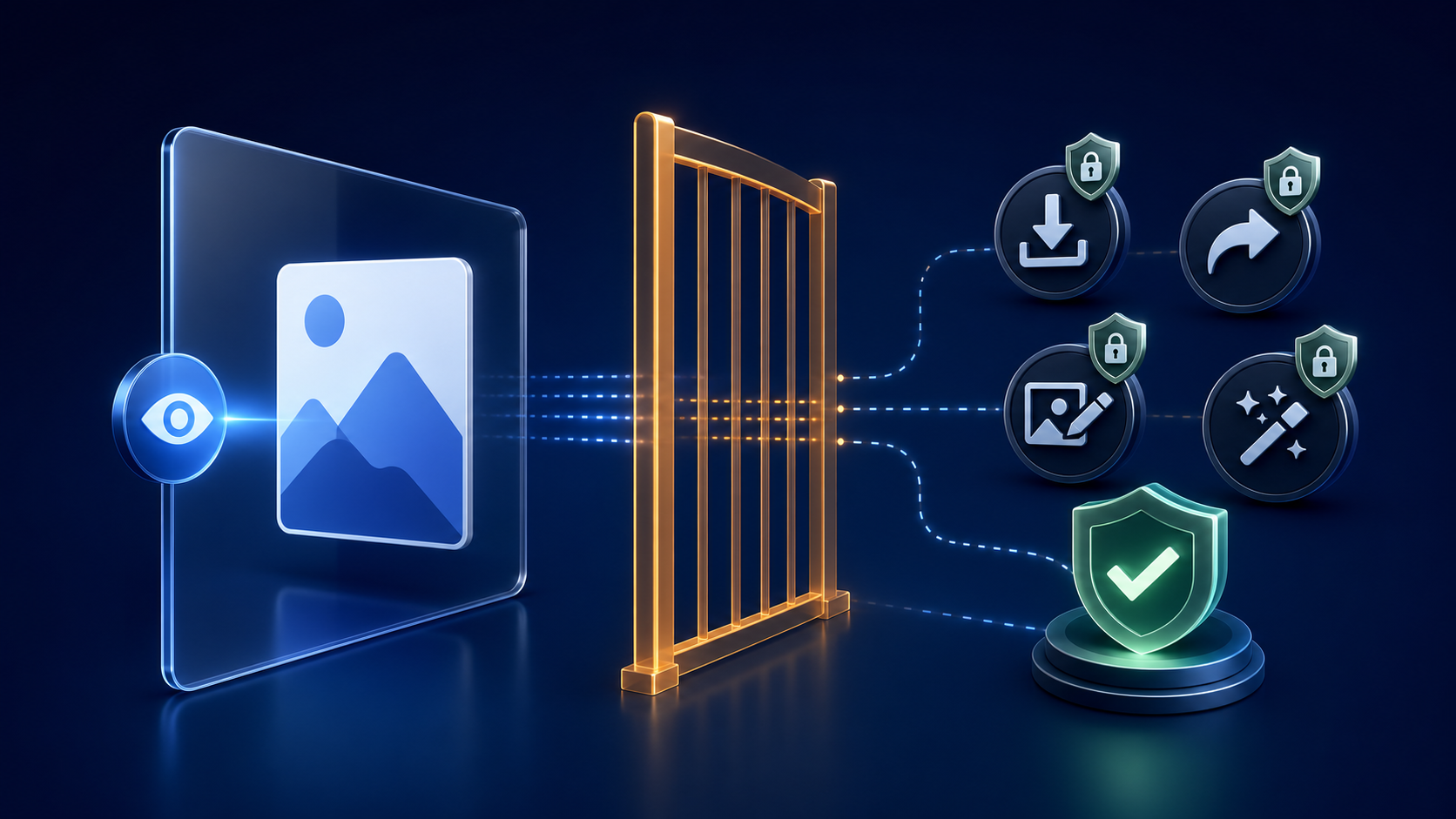
Online visibility answers one narrow question: the image can currently be seen in a particular place. It does not answer who may copy it, alter it, sexualize it, distribute it, or use it to represent something the subject never agreed to.
Access is not a bundle of rights
A photograph may appear on a public profile, company page, news article, portfolio, search result, or event gallery. That access does not automatically transfer copyright, privacy rights, personality rights, or control over the depicted person’s likeness.
Platform features can also be misunderstood. A visible share button may allow a link or in-platform repost under certain rules; it does not necessarily authorize downloading the file, removing attribution, editing the subject, or publishing a transformed version elsewhere.
Each action crosses a different boundary
Viewing normally leaves the original context intact. Saving creates another copy. Reposting introduces a new audience. Editing changes meaning or appearance. AI transformation may send the file to another provider and create sensitive new material. Publication can make the result searchable, copyable, and difficult to contain.
Because the risks increase, permission for one step should never be stretched to cover the next. “You may repost my event photo” is not permission to create an intimate AI edit.
Ask separately before you
- Download or store a copy outside the original platform.
- Repost the photograph to a new account, group, or audience.
- Crop, retouch, combine, or substantially change the image.
- Upload it to an AI service or other third-party processor.
- Create an intimate, sexualized, humiliating, or misleading result.
- Use the image in advertising, impersonation, or a commercial project.
- Publish the output or send it to another person.
- Reuse the file after the original purpose has ended.
Context shapes the original expectation
A professional headshot was likely published to identify someone in a work setting. A sports image documents an event. A dating profile supports introductions on that platform. A family photograph communicates with a chosen audience. Removing an image from its context can create a use the person never anticipated.
Even when a platform account is public, the subject may reasonably oppose an intimate transformation, deceptive caption, commercial endorsement, or hostile repost. Ethical boundaries should not be reduced to whatever a website technically allows.
Public figures still have boundaries
Fame or public office can increase legitimate reporting and commentary, but it does not erase human dignity or grant unlimited permission for intimate fabrication. Public interest and public curiosity are not the same. A person being widely photographed does not make non-consensual sexualization acceptable.
Misleading AI imagery may also create reputational, platform, legal, or safety consequences. Labeling something as entertainment does not necessarily remove those harms.
A screenshot does not change the rule
Taking a screenshot can make an image easier to store or conceal its source, but it does not create new permission. Screenshots may preserve usernames, timestamps, messages, location clues, or other identifying details. Cropping away a watermark or profile name does not turn the underlying image into ownerless material.
Private groups and leaked images are not public permission
An image copied from a private chat, closed group, hacked account, leaked archive, or accidental public setting should not be treated as freely usable. The way it became accessible may itself involve a privacy violation.
Do not download, forward, or upload material merely because others are already sharing it. Repetition adds exposure and can intensify harm.
Old posts do not create permanent consent
A public image may remain indexed after the person changed privacy settings, closed an account, left a profession, or withdrew the original post. Age, relationships, and circumstances can also change. An old photograph is not a permanent licence for new uses.
If the planned transformation is sensitive, ask the adult subject directly and describe the current purpose. If contact is impossible, choose an image you own, a properly licensed asset that permits the intended use, or a fictional adult character not based on an identifiable person.
Copyright and consent answer different questions
The photographer may own copyright while the subject has separate privacy, publicity, or personal rights. A stock licence can permit certain edits without proving that an identifiable person agreed to every sensitive use. Conversely, a subject’s agreement may not transfer the photographer’s copyright.
This distinction varies by jurisdiction, so permissions and licences must be checked for the actual use. When legal certainty matters, seek qualified local advice.
AI upload creates an additional decision
Uploading sends the image to a provider that may collect account data, logs, metadata, or copies under its own policy. Before asking for consent, understand the service’s storage, training, sharing, security, and deletion practices. A person cannot make an informed choice if those details are hidden from them.
Use the pre-upload privacy checklist and read what to look for in a service privacy policy.
Use a permission ladder
Start with the exact action you want to take. Ask whether the adult subject agrees to that image, edit, provider, storage period, viewer, and possible sharing. If the action changes, ask again. Never infer permission from visibility, silence, a relationship, an earlier image, or a different type of edit.
The homepage explains consent and responsible use, and our Safety Guide provides the full decision checklist. The related article Public Photos Are Not Automatic Permission examines why access and consent must remain separate.
Minors are never an exception
Never upload, create, request, possess, or share sexualized content involving anyone under 18, including edited, fictionalized, or “aged-up” material. A public photograph of a minor does not authorize sexualization. If age is unknown or uncertain, do not use the image.
Our position
Undress Net is an independent review website, not an AI image-generation service. We do not support non-consensual intimate imagery, harassment, blackmail, impersonation, or sexualized content involving minors. Public visibility never cancels consent, privacy, dignity, platform rules, or applicable law.