
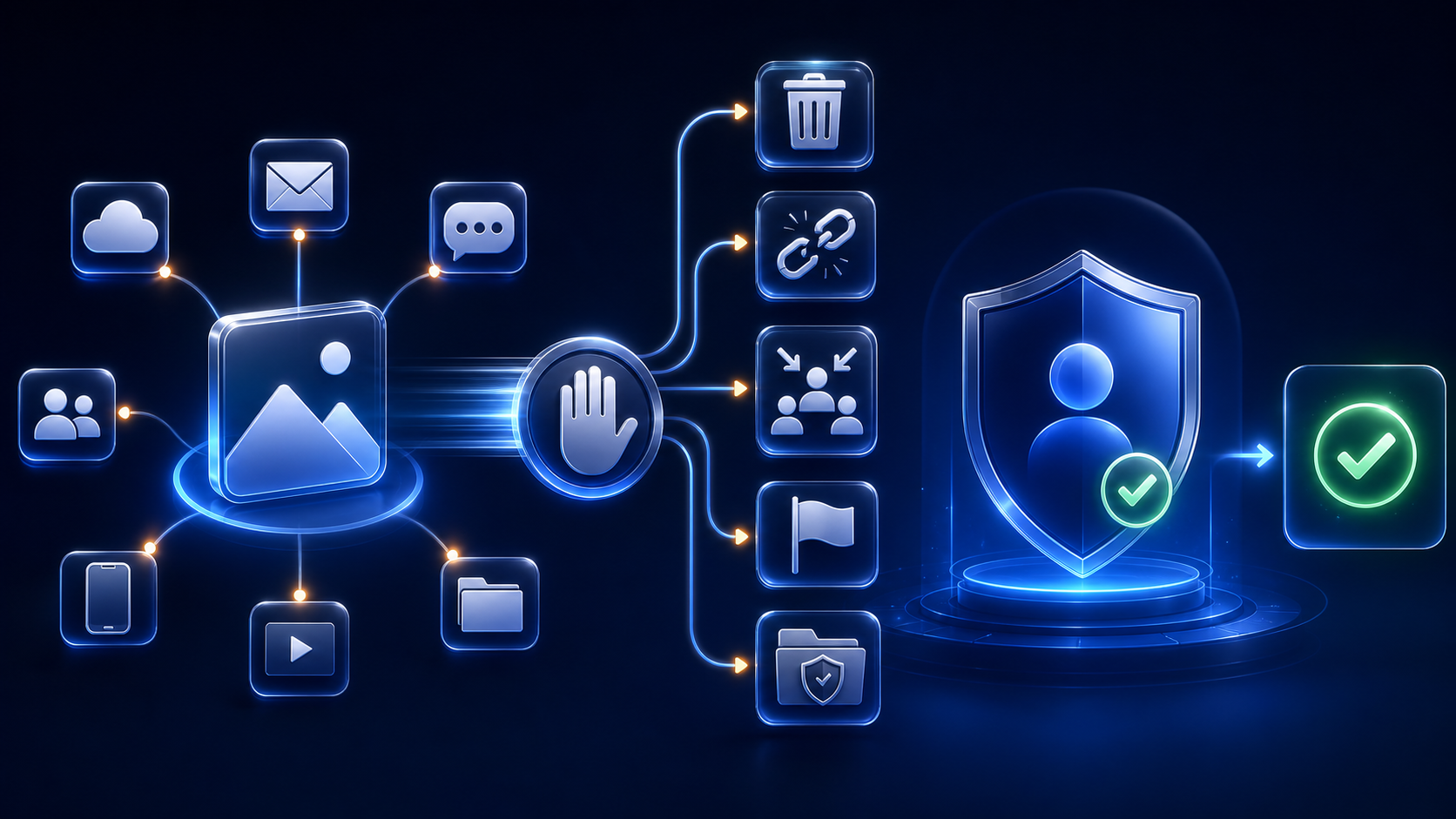
Consent can be withdrawn. Even if an adult originally agreed to creation or limited sharing, that does not create permanent permission. A prompt, respectful response can reduce exposure and demonstrate that the person’s privacy and dignity matter.
Stop all new sharing first
Do not send the image to anyone else, post a response containing it, create another version, or upload it to a different service. Pause automated posts, scheduled messages, shared galleries, and collaboration links where possible.
Do not forward the image to ask friends whether the removal request is reasonable. The subject does not need to win a debate before you stop increasing exposure.
Acknowledge the request without pressure
A short response can confirm that you received the request and are taking action. Avoid demanding a reason, asking the person to prove emotional harm, or using the image as leverage. Do not threaten to keep or publish copies because of an argument, breakup, payment dispute, or changed relationship.
If identity verification is genuinely necessary to prevent a fraudulent takedown, request only proportionate information through a secure channel. Never demand intimate material or unrelated identity documents.
Immediate removal checklist
- Stop creating, sending, posting, and scheduling new copies.
- Delete posts, messages, galleries, drafts, exports, and local duplicates you control.
- Revoke public links, shared-folder access, and collaboration permissions.
- Use the provider’s deletion controls for uploads and generated outputs.
- Ask authorized recipients to delete their copies and not redistribute them.
- Submit platform removal or privacy reports where copies remain.
- Document the actions taken without reproducing the sensitive image.
- Tell the person honestly about any copy you cannot directly control.
Remove copies under your control
Check the obvious locations and the less visible ones: device galleries, downloads, editing applications, drafts, cloud albums, shared folders, chat attachments, trash folders, scheduled posts, account histories, and backups you can manage. An image may have several edited versions or thumbnails.
Follow the provider’s documented deletion process rather than assuming that removing a gallery tile erases the underlying file. Our guide to file retention and deletion explains active storage, backups, account closure, and confirmation.
Revoke links and access
A shared link may remain available after a message is deleted. Disable the link, remove collaborators, review album members, and change permissions. If a device or account may have been compromised, end unfamiliar sessions and secure the account.
Access revocation cannot erase copies already downloaded by recipients, but it can stop new views and prevent further automatic synchronization.
Contact recipients carefully
If sharing was previously authorized, ask recipients privately to delete the file and any backups under their control. Keep the request concise and avoid attaching the image again. Ask them not to forward it, discuss it publicly, or contact the subject unnecessarily.
Do not publish a list of recipients or accuse people publicly without evidence. Public confrontation can identify the subject and draw more attention to the material.
Use platform reporting tools
When material appears on a service you do not control, use its privacy, impersonation, intimate-image, copyright, or abuse reporting route as appropriate. Provide direct URLs, account identifiers, dates, and a clear description without creating extra copies of sensitive content.
Search engines may offer removal processes for certain sensitive or personal results, but removing a result does not necessarily remove the source page. Report to the host as well.
Preserve evidence without preserving harm
If the image is connected to harassment, threats, blackmail, fraud, or repeated redistribution, evidence may be needed. Record URLs, usernames, dates, report numbers, and message text. Screenshots should avoid duplicating intimate content when account and conversation details are sufficient.
For suspected illegal sexualized content involving a minor, do not download, copy, or redistribute the material. Follow the platform’s child-safety process and instructions from the appropriate local authority or hotline.
Be honest about technical limits
Removing every copy may be impossible after downloads, screenshots, reposts, or backups outside your control. Do not promise complete erasure if you cannot guarantee it. Explain what you removed, which requests you submitted, and which responses are still pending.
Technical limits are not an excuse to do nothing. Rapid containment can still reduce future access and demonstrate respect for withdrawn permission.
Removal and evidence may need balancing
In a serious abuse case, the affected person may need a limited, secure record for a platform appeal, legal report, or support organization. That decision should prioritize their wishes and qualified guidance. It does not justify circulating the image among friends or saving casual copies “just in case.”
If someone refuses to remove an image
Do not respond with threats or payment. Save safe evidence of the refusal, report the account and specific URLs, strengthen account privacy, and seek help from a trusted person, victim-support organization, platform, or relevant authority. If there is immediate danger, contact local emergency services.
You can Contact / Report a Concern about material or links published on Undress Net. We cannot remove content hosted by unrelated services, but we can review concerns within this website’s control.
Prevent the same problem from happening again
Agree on creation, storage, audience, sharing, and deletion before using a real adult’s image. Keep the audience small, minimize copies, and choose services with clear retention and deletion controls. Ask again whenever the purpose changes.
Review the steps to take when content is misused, read why consent must remain specific and ongoing, and consult the Undress Net Privacy Policy for this website’s practices.
Minors require immediate caution
Never create, request, possess, or share sexualized content involving anyone under 18, including edited, generated, fictionalized, or “aged-up” material. If age is uncertain, do not proceed. Do not make extra copies while attempting removal or reporting.
Our position
Undress Net is an independent review website, not an AI image-generation service. We do not support non-consensual intimate imagery, harassment, blackmail, impersonation, or sexualized content involving minors. A request to remove an image should be handled quickly, respectfully, and without retaliation.